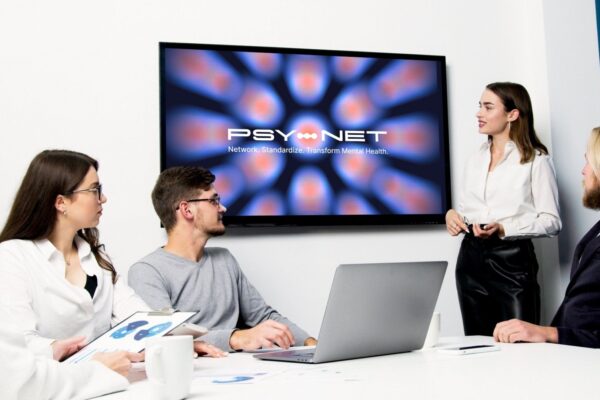
SE17 – Crushing the Barriers in Psychedelic Science COST Action CA24130 (PSY-NET) – WG2 Meeting
We are thrilled to announce that the official PSY-NET Working Group 2 Satellite Event has been confirmed at the FENS Forum 2026 in Barcelona!
As the medicinal use of psychedelics enters a renewed era of exploration, there is a pressing need to advance research under the highest scientific standards. Although psychedelics are generally considered physiologically safe, their profound subjective effects pose major challenges for translating findings from preclinical models into clinical practice. These challenges highlight critical gaps in study designs, which must be refined and harmonized across research groups to enable robust clinical translation.
Establishing a shared database of preclinical data on the toxicity, safety, and therapeutic mechanisms of both established and novel compounds could significantly accelerate progress. However, this raises key questions around data sharing, intellectual property protection, and collaborative frameworks. How can we design preclinical studies that are truly fit for purpose — efficient, translatable, and compliant with complex and often uncharted regulatory landscapes?
At the WG2 meeting, we aim to tackle these challenges head-on, spark interdisciplinary dialogue, and break down the barriers limiting the next generation of psychedelic research.
We will discuss these topics in 3 panels with leading experts in the field:
- 1) Preclinical research – What should we investigate next, and how? What are the methodological limits, and how to overcome them?
- 2) Translational approach – How to plan early stage research to facilitate translation into the clinic. What are the real-life obstacles?
- 3) Intellectual property and business approach – Scientific discovery is only part of the equation. Bringing therapies to patients requires integrating research with business strategy, navigating complex and confusing commercial environments to deliver safe, effective, and affordable treatments to patients in need.
This meeting is organized as a part of the COST Action CA24130 – Psychedelic Renaissance: Turn On, Tune In and Drop In (PSY-NET) and aims to identify and critically evaluate methodological and systemic challenges in the emerging field of psychedelic therapeutics. The overarching objective is to develop evidence-based recommendations that enhance methodological rigor and translational validity in neuroscience research in this field -we look forward to welcoming the neuroscience community for deep discussion.
Target audience: COST Actions Psy-Net (CA24130) WG2 members, and selected FENS forum attendees (form closed)
PROGRAMME
11 JULY 2026
9:00 AM 9:30 AM – Arrival, coffee and mixer
9:30 AM – 13:00 AM – PANEL ON PRECLINICAL RESEARCH MODELS AND LIMITATIONS FOR PSYCHEDELIC STUDIES
- 9:30 AM – 10:00 AM – Prof Philippe De Deurwaerdère (University of Bordeaux) – Psychedelics and the neurochemistry of neurotransmitter systems
- 10:00 AM – 10:30 AM – Danilo De Gregorio (San Raffaele Scientific Institute) – Behavioral Models of psychiatric and addictive disorders in Psychedelic Research: Opportunities and Limits
- 10:30 AM – 11:00 AM – Adam Wojtas, PhD (Stokholm University) – 158 Ways to twitch a mouse head, and why none of them is the answer
- 11:00 AM – 11:20 AM – Coffe break
- 11:20 AM – 13:00 – Discussion/work on Psy-NET WG2 objectives and deliverables regarding pre-clinical models
- 13:00 – 14:30 – lunch break
14:30 PM – 17:00 PM
PANEL ON REGULATORY ASPECTS OF TRANSLATIONAL RESEARCH IN PSYCHEDELICS
- 14:30 – 15:00 – Prof Sandor Nardai (Semmelweis University) –The potential protective role of N N-Dimethyltryptamine in cerebral ischemia reperfusion injury: how to choose our target population for the clinical transition?
- 15:00 – 15:30 – MSc Francisca Silva Project Officer at PAREA (Psychedelic Access and Research European Alliance) – EMA regulatory aspects of translational research with psychedelics
- 15:30 – 17:00 – Discussion/work on Psy-NET WG2 objectives and deliverables on translational validity of the research
12 JULY 2026
9:00 AM – 9:30 AM – arrival, coffee and mixer
9:10 AM – 9:40 AM – INTELECTUAL PROPERTY AND BUSINESS APPROACH
- 9:30 AM – 10:00 AM – Roei Zerahia (Shenkar College of Engineering, Design and Art) – From Spore to Clinic – The Scientist’s Guide to Implementation of Botanical Medicine – Engineering GMP Precision and Building Defensive Strategy
- 10:00 AM – 10:30 AM (✮BONUS TALK✮) – Abhishek Jeenwal (AML professional) Dirty Money in Clean Science: How Criminal Networks Exploit Research Funding (and How to Avoid Getting Framed)
- 10:30 AM – 11:50 PM – panel discussion and consolidation of knowledge created during Psy-NET first WG2 face-to-face meeting
- 11:50 AM – 12:00 PM – Closing remarks and goodbyes
SPEAKERS and ABSTRACTS
Prof Philippe De Deurwaerdère (University of Bordeaux)
De Deurwaerdere did his PhD in Bordeaux, where he studied the influence of serotonin on the release of dopamine within the striatum and the nucleus accumbens in rats. He obtained his PhD in December 1997 and joined the lab of Prof Marie-Françoise Chesselet in the Reed Neurological Center at UCLA, Los Angeles as post-doctoral fellow. He studied the influence of 5-HT2C receptors in the basal ganglia of naïve and hemiparkinsonian rats. His was appointed at the University of Bordeaux in 2000 as Maître de Conférences and became full Professor in 2011. At that time, he was in the Institute of Neurodegenerative Disorders directed by Erwan Bezard in IMN till 2017 with a co-lead research team. He performed several microdialysis studies to decipher the mechanism(s) of action of L-DOPA. He is currently co-team leader at the INCIA institute, Bordeaux, and works on new antidepressant strategies. His current research focuses on the neurochemical organization of neurotransmitters across the CNS at rest and in response to various conditions including environmental novelty, stress, and psychedelic drugs. He is associate editor of several neurobiology journals. He is currently French government representative and vice chair of the COST Action 24130 (Psy-net) dedicated to psychedelics.
Abstract: Psychedelics and the neurochemistry of neurotransmitter systems
Psychedelic drugs alter brain functions, likely involving change of neurotransmitters function. The proportion of data looking at neurotransmitters themselves is quite low (considering Europe too) in the field of psychedelics, obviously limiting accurate interpretation of their short and long term effects on neurotransmission. Without discarding several approaches, the measurement of neurotransmitters can be dynamic, in vivo (intracerebral microdialysis) or “static”, ex vivo (post mortem). This first communication within WG2 will recall these approaches to offer a brief overview of the neurochemical studies addressing the mechanism of action of psychedelics in Europe. Thereafter, I will present in-house post-mortem tissue analysis that allows us to measure the quantity of neurotransmitters and their metabolites at a single time point across the brain. Using this technique, we can correlate regional neurotransmitters quantities resulting in neurochemical networks. Networks may be between a single compound across the brain or between pairs of compounds, to asses interaction between neurotransmitter systems. Psychedelic serotonin 2A receptor agonist TCB-2 and antagonist MDL-100,907 alter neurochemical networks 1h after i.p. administration in a forced exploration paradigm in mice. Specifically, the forced exploration paradigm imposes specific organization of neurotransmission made of correlations of neurotransmitters between brain regions, and the two compounds disrupted this organization. The approach can be used in translational approaches where mice, submitted to chronic stress developed behavioral and neurochemical effects sensitive to one injection of 5-MeO-DMT. These neurochemical networks may offer a sensitive tool to further probe the brain wide neurochemical alterations that accompany the exposure to psychedelic compounds and disease conditions.
Danilo De Gregorio (San Raffaele Scientific Institute)
Danilo De Gregorio obtained a Pharm.D. degree from the University of Naples “Federico II”, Italy, followed by a Ph.D. in Neuropharmacology from the University of Campania “Vanvitelli”, Naples, Italy. He trained as a postdoctoral fellow at the Department of Psychiatry, McGill University, Montreal (QC), Canada under the supervisions of Prof. Gabriella Gobbi and Prof. Nahum Sonenberg. In March 2021, he relocated back to Italy where he has been appointed Assistant Professor of Pharmacology at the Vita-Salute San Raffaele University and Project Leader of the Neuropsychopharmacology Unit of the San Raffaele Scientific Institute. By combining cutting-edge in vivo behavioral and electrophysiological techniques in animal models, Danilo has made contributions to the understanding of the psychopharmacology of psychoactive compounds including hallucinogens and cannabinoids and their role in mental disorders. His work has been published in relevant scientific journals (including Nature, PNAS, Nature Communications). He has received numerous awards for his work including grants from the Canadian Institute of Health Research (CIHR), the Fonds pour la recherche en Santé du Québec, the Italian Ministry of the University and Research and the European Alliance for Rare Disease. Since March 2024, he holds the position of Associate Professor in Pharmacology at the Vita-Salute San Raffaele University.
Abstract: Behavioral Models of psychiatric and addictive disorders in Psychedelic Research: Opportunities and Limits
Preclinical models are widely used to investigate the therapeutic potential of psychedelics, particularly in alcohol use disorder and stress-related conditions. In this talk, we will briefly overview key behavioral paradigms in rodents and what they reveal about psychedelic efficacy. We will then focus on their main limitations, including the difficulty of modeling complex psychopathology. Finally, we will discuss how refining experimental design and model selection may improve translational relevance and guide future research.
Adam Wojtas, PhD (Stokholm University)
A neurobiologist and psychopharmacologist. Throughout his scientific career, he has been involved in research on novel psychoactive substances (so-called “designer drugs” or “legal highs”), as well as classical psychedelics and ketamine. Currently, he is investigating the neuronal circuits involved in the antidepressant mechanism of psilocybin.
Abstract: 158 Ways to twitch a mouse head, and why none of them is the answer
The psychedelic renaissance rests substantially on rodent research. Head-twitch responses, forced-swim immobility, and chronic-stress paradigms remain the workhorses of preclinical psychedelic neuroscience and have yielded genuine mechanistic insight, including 5-HT2A-dependent cortical plasticity dissociable from the subjective “trip.” Yet as human data accumulate rapidly—from phase II/III trials, naturalistic and microdosing cohorts, neuroimaging, post-mortem transcriptomics, and human iPSC-derived neurons and organoids—the role of animal models warrants re-examination. This contribution is framed as questions rather than answers. The mechanistic and causal use of animals— circuit dissection, receptor pharmacology, pharmacokinetics, safety—appears robust. The predictive and surrogate use—behavioural proxies standing in for human therapeutic outcomes—rests on more contestable ground: the head-twitch response indexes receptor engagement rather than efficacy, the forced-swim test was not designed to model depression, and many “disease models” may capture the manipulation rather than the disorder. A recurring thread is whether the problem lies less with animal research as such than with the behavioural readouts attached to it. Paradigms engineered for cross-species use—affective bias and judgement-bias tasks, where an analogous negative affective bias is quantifiable in both rodents and humans—suggest that more translationally grounded endpoints are at least conceivable, though whether they can carry the predictive weight currently placed on legacy assays remains open. Three tensions are raised: whether subjective, context-dependent dimensions can be approximated in animals at all, given that set-and-setting cannot be reproduced in the cage; how far methodological fragility and unpublished reverse-translation failures inflate the literature; and what is displaced, under tightening 3Rs pressure, when weakly justified rodent studies run in place of more translatable alternatives?
Prof Sandor Nardai (Semmelweis University)
Prof. Sándor Nardai, MD, PhD, MBA, is an Associate Professor and Head of the Department of Neurointervention at Semmelweis University in Budapest, Hungary. A specialist in neurology, interventional cardiology, and neurointervention, his research focuses on cerebrovascular diseases and the endovascular treatment of ischemic and hemorrhagic stroke. Principal Investigator in clinical trial on intravenous DMT administration as a neuroprotective and restorative agent for ischemic stroke.
MSc Francisca Silva Project Officer at PAREA (Psychedelic Access and Research European Alliance)
A neuroscientist by training, Francisca now serves as Project Officer at PAREA (Psychedelic Access and Research European Alliance), where she works to advance psychedelic research and access across Europe. Before joining PAREA, Francisca worked on psychedelics-related initiatives at the European Medicines Agency, including the landmark 2024 Multi-Stakeholder Workshop on Psychedelics and related outputs, and the review of psychedelics trials in depression from a European regulatory lens. Her academic journey spans a dual MSc in Brain and Mind Sciences (UCL & Sorbonne Université) and a BSc from Maastricht Science Programme, with expertise in molecular biology, neuropsychopharmacology, clinical neurology, and neuropsychiatry. She is passionate about effective science communication and bridging the gap between research and patient care.
Abstract:
As psychedelics move closer to formal development as treatments in mainstream healthcare, understanding the regulatory frameworks and requirements underpinning their evaluation and possible approval by medicines regulators is becoming increasingly important. The European Medicines Agency (EMA) and European regulatory network have demonstrated openness and growing engagement with the field through initiatives such as the EMA Workshop on Psychedelics, updated clinical guidance, scientific publications and integration of a psychedelic product into the PRIME (priority medicines) scheme. Discussions on the regulatory development of psychedelics often focus on clinical challenges, including functional unblinding, expectancy effects, integration of psychological support or psychotherapy, drivers and duration of therapeutic benefits, and documentation of adverse events. However, marketing authorisation applications for new treatments also require robust non-clinical data packages, making high-quality preclinical and translational research essential for regulatory submission and addressing remaining knowledge gaps in the field. This presentation will provide an overview of key European regulatory frameworks and requirements relevant for psychedelic (or any) treatment development, including guidance on pre-clinical requirements and platforms for early regulatory engagement. Greater awareness of these requirements and tools can help researchers anticipate potential evidence gaps, facilitate translation into clinical development, and strengthen coordination across the field to address shared scientific and regulatory challenges.
Roei Zerahia (Shenkar College of Engineering, Design and Art)
A senior faculty member at the faculty of Engineering at Shenkar & the Co-Founder of MSICS Pharma – a pioneering company which produces pharmaceutical naturally sourced psilocybin products for clinical trials.
Abstract: From Spore to Clinic – The Scientist’s Guide to Implementation of Botanical Medicine – Engineering GMP Precision and Building Defensive Strategy
The lecture explores how a botanical psychedelic evolves from research to GMP-certified medicine. It covers scalable genetics, manufacturing, regulatory alignment, and clinical collaboration, and will go over the various processes in the value chain of growing and manufacturing a psilocybin-based medical product for human use. We will talk about connecting hospitals to promote clinical trials for the development of the industry and in order to bring innovative solutions for the unmet medical needs in the mental health industry, highlighting common translational pitfalls and strategies to build a defensible, real-world implementation pathway beyond discovery.
Abhishek Jeenwal AML professional
Anti-Money Laundering (AML) and Financial Crime professional with over eight years of experience investigating money laundering risks, suspicious activities, and high-risk customers across banking and asset management. His work has involved conducting enhanced due diligence on companies and investors, identifying fraud indicators, assessing beneficial ownership structures, and evaluating reputational and financial crime risks. Having worked on complex cases involving corporate entities and cross-border financial activities, he had gained firsthand insight into how illicit funds can be concealed within legitimate systems. His interest lies in understanding these hidden financial networks and the evolving methods used to detect and prevent financial crime.
Abstract: Dirty Money in Clean Science: How Criminal Networks Exploit Research Funding (and How to Avoid Getting Framed)
While we often think of money laundering involving cash-heavy businesses like casinos or laundromats, the STEM research sector has increasingly been exploited by criminals to disguise illicit funds through fake grants, shell companies, and fraudulent billing. Academic institutions and scientific vendors handle billions of money in funding, making them highly attractive targets for “layering” illegal wealth. Since science is underfunded and lot of scientists looks for alternative sources of funding, we will think – what kind of risk comes with going with wrong investors and how to defend yourself from fraudulent practices?
Event Details
Date: 11 – 12 July
Time: 8:30AM-5PM on 11 July, 8:30 AM – 12 PM on 12 July
Venue: OneCoWork Catedral | Barcelona Coworking
Street: Av. de la Catedral, 6
ZIP/Postal Code: 08002
City: Barcelona
This event is organized by COST Action PSY-NET (CA24130), Work Group 2.
For more details, please contact: urszula.kozlowska@ump.edu.pl